

Most entrepreneurs operate without documented systems, treating each decision and task as a one-off problem to solve. This creates friction, inconsistency, and a ceiling on what you can delegate.
At Ailudus, we’ve found that personal systems for entrepreneurs aren’t luxuries-they’re the foundation that transforms individual effort into sustainable leverage. When you document your decision-making, rhythms, and standards, you stop fighting the same battles repeatedly.
The Cost of Operating Without Systems
Decision fatigue impairs judgment quality and compounds daily. Entrepreneurs who operate without repeatable processes expend mental energy on tasks they’ve already solved, leaving less capacity for strategic work. Without systems, you solve the same routing problems repeatedly-how to structure a client call, what information to gather before making a hire, how to allocate your limited time across competing priorities. Each repetition consumes energy that could fuel growth.
Where Bottlenecks Emerge
Entrepreneurs without documented processes become the constraint in their own operations. Work stalls waiting for your approval because no one knows your standards. Team members interpret your preferences differently, creating rework and inconsistency. Client interactions vary because you haven’t codified how discovery happens, what questions matter, or how you communicate value. This inconsistency erodes trust and makes delegation feel risky-you end up redoing work because the output doesn’t match your unstated expectations. The real cost isn’t time spent fixing things; it’s the opportunity cost of work that never gets started because you occupy yourself with operational friction.
Systems as Decision Architecture
A personal operating system documents three things: how you make decisions, when you make them, and who participates. This isn’t bureaucracy. It’s the opposite.
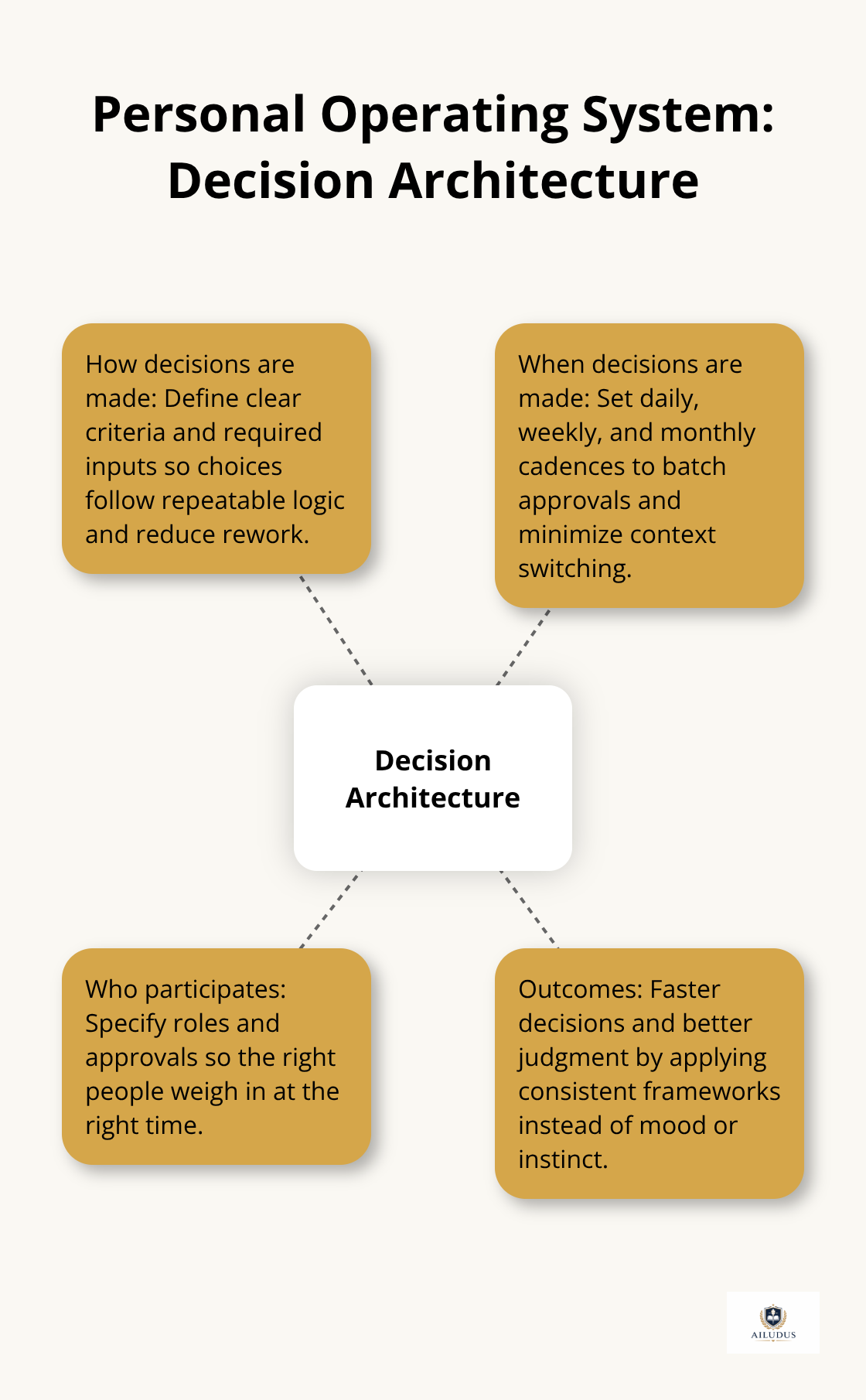
When you write down that hiring decisions require input from three people, that you evaluate candidates against five specific criteria, and that final approval happens in a Friday meeting, you eliminate the need to invent the process each time. Your team knows what to expect. Decisions happen faster because the framework exists. Decisions also improve because you apply consistent logic rather than operating on instinct or mood.
How Discipline Compounds
The discipline compounds. After three months of consistent decision-making, patterns emerge. You notice which criteria predict success. You refine the process. After six months, hiring becomes predictable and faster. This same principle applies to client onboarding, resource allocation, and communication standards. Once you establish the framework, you stop treating each instance as novel. The system itself becomes your competitive advantage-not because it’s complex, but because most entrepreneurs never build one. Your documented standards let you scale without losing quality. Your team executes with confidence. Your decisions improve because you measure them against consistent criteria rather than mood or circumstance.
The foundation exists. Now you need to translate this architecture into the specific rhythms and protocols that govern your daily work.
Building Your Core Operating Framework
The transition from intuition to documented process requires three concrete moves. First, establish who decides what and when. This isn’t about creating hierarchy for its own sake-it’s about eliminating the ambiguity that forces decisions upward. Define which categories of choice belong entirely to you, which require input from specific people, and which you can delegate outright. A hiring decision might require you plus two team leads. A vendor selection under $500 might require only your approval. A client communication standard applies universally without exception. Write these down with enough specificity that someone else could apply them correctly.
The second move maps your temporal rhythms with output targets attached. Most entrepreneurs operate reactively, responding to whatever surfaces loudest. Instead, establish what you decide daily, weekly, and monthly, with concrete outputs tied to each interval. Your daily rhythm might include a 15-minute morning protocol where you review the previous day’s decisions and flag blockers. Your weekly rhythm might include a Friday approval meeting where you batch hiring and major spending decisions together, reducing context switching. Your monthly rhythm might include a full-day review where you assess whether your decision patterns produce the results you intended. The specificity matters. Not just “have a weekly meeting,” but “Friday 2 PM, 60 minutes, three participants, three decisions minimum, zero decisions without criteria documented beforehand.” This prevents the meeting from becoming theater.
How Communication Standards Control Information Flow
Communication standards govern how information moves and decisions reach your team. Most entrepreneurs communicate inconsistently-some decisions announced in Slack, others in person, some buried in email threads. This creates confusion about what’s official, what’s tentative, and what’s already decided. Document which channels carry which weight. Decisions go in writing through a specific medium. Status updates follow a template. Client-facing communication reflects your voice, not whatever mood you’re in.
One founder requires all client proposals to follow a seven-section structure: problem statement, their current state, desired outcome, your approach, timeline, investment, and success metrics. Every proposal. This consistency builds confidence-clients recognize the rigor. Your team executes faster because they’re not guessing what you want. The standards also establish approval loops. Who sees work before it goes out? What constitutes finished? What triggers revision? A marketing director built a template where client deliverables require sign-off from three people in sequence-creator, editor, then client manager-each with specific criteria for approval. Work moved faster because people knew exactly what needed fixing and in what order.
Measurement Closes the Loop
Your operating framework only works if you measure whether it actually works. Track output against the rhythms you’ve established. If your daily decision protocol targets three decisions per day, track whether you hit that. If your weekly meeting should approve one hire, measure whether approvals happen on schedule or get delayed by missing information. If your communication standards require client proposals within five days of discovery, measure the actual cycle time. Track these numbers monthly.
After three months, patterns emerge. You’ll notice the Friday meeting consistently runs over because four people show up instead of three. You’ll see that 60% of hiring decisions get delayed because the background check process isn’t defined. You’ll find that client proposals take eight days instead of five because discovery conversations aren’t capturing the information your template requires.
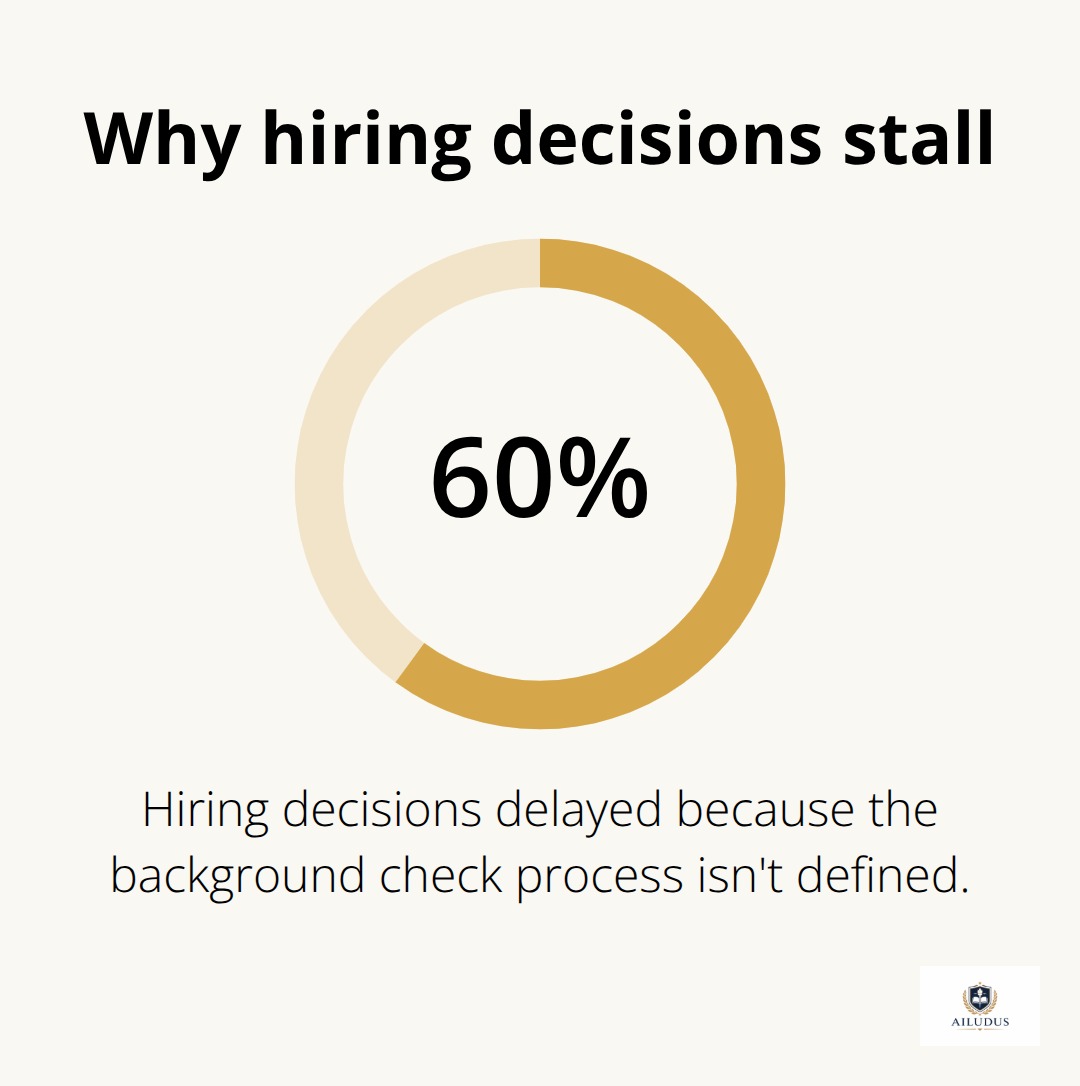
These gaps aren’t failures-they’re data. They tell you where your system needs adjustment.
The discipline here is treating your operating framework as a living document. Update it quarterly based on what the data shows. A founder who tracks weekly output targets will notice in month two that Monday decisions consistently get deferred to Tuesday because you’re processing the previous week’s work. You adjust the protocol: Sunday evening prep instead of Monday morning scramble. The system improves because you measure it and refine it. Without measurement, you have a nice document collecting dust.
Once you’ve established these three elements-decision authority, temporal rhythms, and communication standards-you face the practical challenge of embedding them into daily work. This requires more than documentation. It requires the right tools, feedback mechanisms, and accountability structures that actually enforce what you’ve written.
Embedding Systems Into Daily Work
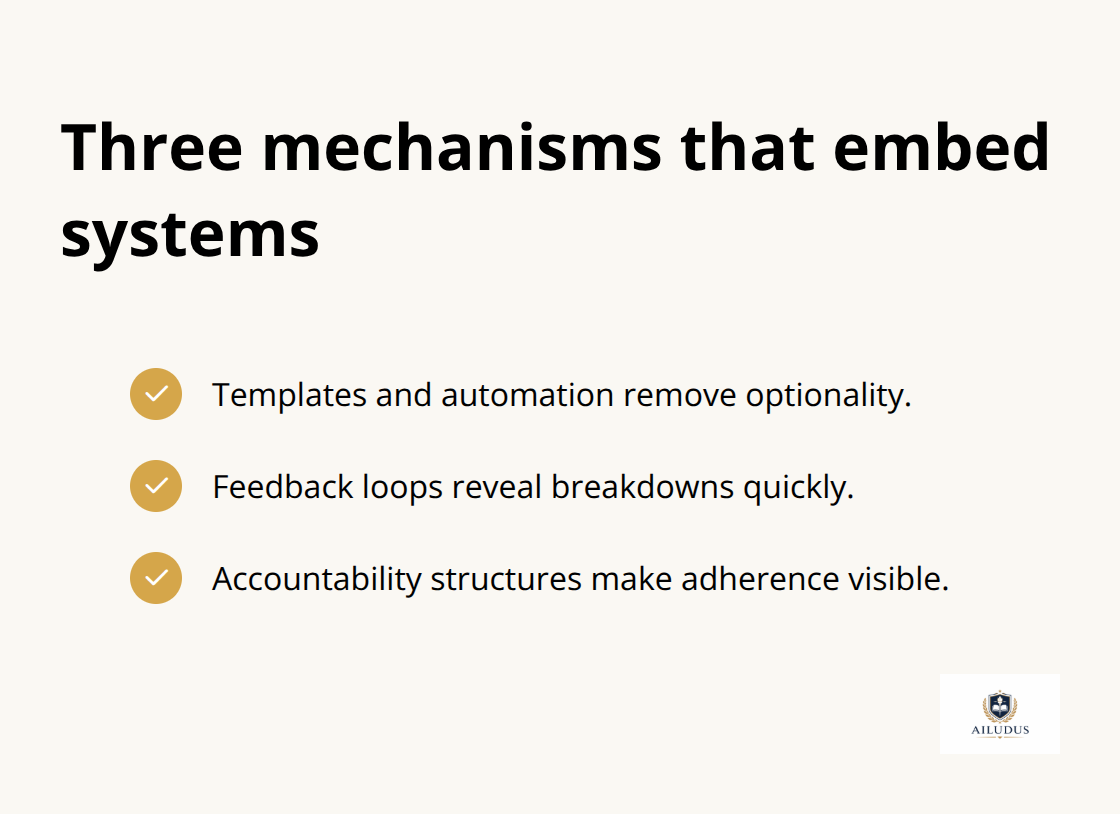
Documentation means nothing without the tools and structures that enforce it. Most entrepreneurs write an operating framework, file it away, and revert to habit within weeks. The system fails not because the logic is flawed but because nothing in the daily workflow actually enforces it. You need three concrete mechanisms: templates and automation that eliminate decision points, feedback loops for system performance that surface when the system breaks, and accountability structures that make deviation visible and costly.
Templates and Automation Remove Friction
Templates and automation do the heavy lifting. If your communication standard requires all client proposals to follow a seven-section structure, build that structure into your proposal tool so the template loads automatically. Salesforce or Pipedrive users can enforce proposal templates at the stage level. A founder using Google Docs creates a master template and sets it as the default for any new client document, requiring three approvals before publication. The template removes the need to remember the structure each time. It eliminates the decision about format. Your team executes faster because they’re not inventing the wheel.
Automation goes further. If your daily decision protocol requires reviewing blockers from the previous day, set a recurring calendar event with a pre-populated template asking three specific questions: What decisions got made? What decisions got delayed? What information was missing? The template takes 60 seconds to complete instead of the mental work of remembering what to track. If your weekly meeting batches hiring decisions, create a checklist template that feeds directly into your meeting agenda. Each candidate gets evaluated against your five documented criteria. The template enforces consistency. It also creates a record. After six months of hiring decisions, you have data showing which criteria predicted strong performers and which were noise. Without the template, that data disappears into memory.
Feedback Loops Expose System Degradation
Feedback loops surface when the system degrades. Track one decision-making metric that matters most to your operating system. If your framework targets three decisions per day, measure actual decision volume daily for a month. Use a simple spreadsheet or Airtable base. Three columns: date, number of decisions, blockers that prevented hitting the target. After 30 days, patterns emerge. You’ll see that Mondays average 1.2 decisions because you’re processing weekend email. Tuesdays hit 3.5 because you batch Monday’s overflow. Fridays drop to 1.8 because the approval meeting consumes the decision-making slot. This data tells you whether your rhythm matches reality. Most entrepreneurs guess. They assume their system works because it looks good on paper. Measurement reveals the gap.
A founder tracking proposal cycle time discovered that discovery calls took an average of four days to convert into a proposal, despite a documented five-day target. Investigation showed discovery calls weren’t capturing the budget information required by the proposal template. The system wasn’t broken; the discovery protocol was incomplete. She added one question to the discovery call template and cycle time dropped to three days. Without measurement, that inefficiency would have persisted indefinitely.
Track the metric monthly. Plot it. Watch for trends. If the metric deteriorates for two consecutive months, the system needs adjustment. If it improves, identify what changed and codify it further.
Accountability Structures Keep Systems Active
Accountability transforms systems from aspirational to actual. The simplest structure: public tracking. A founder uses a weekly team standup to report three numbers: decisions made that week, decisions delayed, and reasons for delays. The team sees the data. If delays spike, someone will ask why. That social pressure keeps the system active.
Another approach uses structured reviews. Every 90 days, the founder sits with one team lead and reviews the operating framework against actual performance. They compare documented protocols to what actually happened. They identify where reality diverged from the system. They update the system based on that gap. The review takes three hours. It prevents the system from calcifying.
A third structure embeds accountability into role descriptions. A client success manager’s job description includes maintaining communication standards: all client deliverables follow the template, all status updates use the required format, all escalations follow the approval chain. During performance reviews, evaluate whether they executed the system, not just whether clients are satisfied. This makes the system part of the job, not something extra.
The strongest accountability structure combines all three. Public tracking creates visibility. Structured reviews ensure refinement. Role-based accountability makes it operational. This combination keeps systems alive instead of allowing them to decay.
Final Thoughts
Personal systems for entrepreneurs aren’t one-time projects-they form the operating infrastructure that separates sustainable growth from perpetual scrambling. The frameworks you’ve built transform how you make decisions, structure your time, and communicate standards. Each system you add multiplies the leverage of the previous one because they reinforce each other and compound over time.
Start with one system in the area where you lose the most time or make the most inconsistent decisions. Document it, measure it, and refine it based on what the data shows. After three months, you’ll have proof that the discipline works, and that proof becomes permission to expand to the next system using the same rigor.
The real advantage isn’t the systems themselves-it’s that you stop treating your business as a collection of problems to solve and start treating it as a machine you can improve. Your team executes with confidence because they know what success looks like. Your decisions improve because you apply consistent logic. Explore our operating frameworks designed specifically for builders who value clarity and ownership over hype.
— Published by Ailudus, the operating system for modern builders.